Rebuilding this place around the elephants
Seven elephants live here, across more than 2,000 hectares of forest. What happens around them is changing completely.
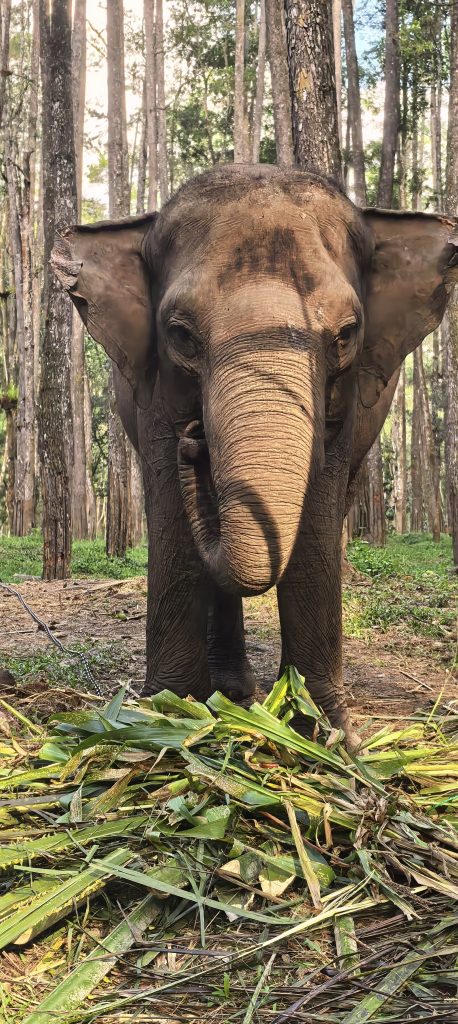
This site has a history we are not hiding. It operated as an entertainment venue — elephant rides, close contact, photographs on request. That model is common across the region. It is not one we want any part of.
What we are changing
No riding for visitors. Not for photographs, not as an attraction, not at all. Our mahouts do ride — that is how they work with the animals, and it is standard practice in elephant care across the region. What we have ended is riding as entertainment.
No touching. Elephants are not petting animals. Physical contact is stressful for them, and it teaches visitors the wrong thing about what an elephant is.
Watching instead. From a proper distance, quietly, with someone explaining what you are actually seeing — how a herd communicates, what the animals eat, what conservation here genuinely involves.
About the chains
You will see chains in some of our photographs. We would rather explain them than crop them out.
Not every elephant is chained, and none of them are chained all day. Chains are used at night, and when an animal goes into the forest on its own. Across 2,000 hectares, the sound a chain makes is often the only way to find an elephant again.
The other reason is musth — the period when a bull elephant’s hormone levels rise sharply and he becomes unpredictable and genuinely dangerous, to people and to other elephants. There is no version of that situation we can manage without restraint.
Some of this could change. GPS collars would let us locate an elephant in the forest without relying on the sound of a chain. That is exactly the kind of thing support for this project would pay for.
This is what captivity looks like, even across 2,000 hectares, and even when every intention is care. We are not going to photograph around it.
Currently closed
The sanctuary is not open to the public at the moment. We are working towards reopening, and the work continues out of sight in the meantime: the daily care of seven elephants, and the mahouts who look after them.
When we reopen, day visits will be bookable directly through this site. Small groups, fixed times, guided throughout.